











Smart Street Lighting: The Intelligent Transformation of Urban Illumination
Author:
Source:
Release time:2026-05-07

Role Transformation: From Lighting Tool to Sensing Node
Urban street lighting is undergoing a fundamental functional upgrade. In the past, it was merely a light source controlled by a timer;
Today, it is becoming a data-collection node for smart cities. At the heart of this transformation lies the integration of traditional
“Electrical energy-consuming equipment” is transforming into integrated, multifunctional infrastructure that combines lighting, sensing, and communication.

Technical Architecture: Edge-End Collaborative Operating Logic
The technological foundation of smart streetlights is a closed-loop system comprising “sensing–communication–control.” Each streetlight
Equipped with a single-lamp controller, it enables independent brightness adjustment and energy consumption monitoring; via 4G or LoRa, among others.
Low-power wide-area network for real-time data transmission to the cloud management platform.
The platform leverages AI algorithms to analyze traffic volume and ambient illuminance, automatically implementing “on-demand lighting.”
Strategy: During late-night hours when pedestrian and vehicle traffic is minimal, the lighting fixtures automatically operate at reduced power, achieving energy savings of 40% to 60%.

Energy Autonomy: A Breakthrough Path for Photovoltaic-Storage-Direct-Drive-Soft-Load
Traditional streetlights rely entirely on the municipal power grid and cease to function across the board in the event of a power-line failure.
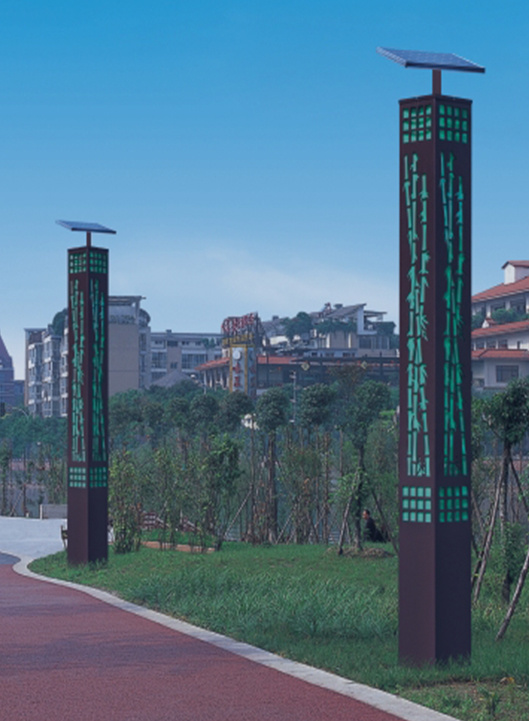
The new-generation product integrates photovoltaic panels, energy-storage batteries, and LED luminaires into a single unit.
Establish a localized “generation-storage-use” closed loop. During the day, photovoltaic power is stored in batteries,
Prioritize the use of green electricity at night; activate energy storage for power supply during peak electricity price periods.
The system can maintain lighting for several hours even when the power grid is down. This design is particularly well-suited for remote road sections and disaster response scenarios.

Industry Dilemma: Lack of Standards and Ways to Break the Impasse
The biggest challenge facing the industry today is protocol incompatibility—streetlights from different manufacturers
Inability to integrate with the same platform results in urban management authorities maintaining multiple systems,
Costs remain stubbornly high. At the national level, efforts are underway to establish unified communication interface and device model standards.
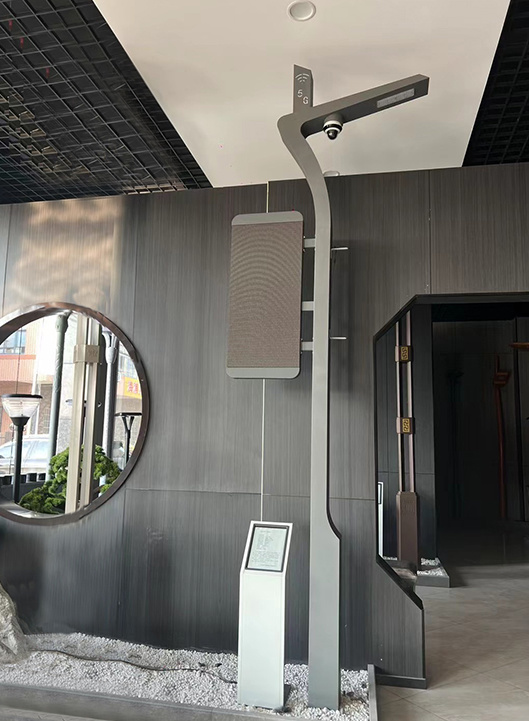
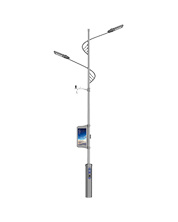
Transform streetlight poles into platforms capable of hosting environmental monitoring, traffic sensing, 5G base stations, and more.
A standardized base for the equipment. The completion of standardization will mark a pivotal turning point in the transition of smart streetlights from pilot projects to large-scale deployment.

At its core, the smart streetlight redefines lighting through data. It can significantly reduce urban energy consumption,
It can also provide proactive fault alarms and precise operations and maintenance, while supporting a wide range of urban sensing functions.
Driven by the dual imperatives of the “dual carbon” goals and refined governance, smart streetlights have evolved from a technical concept.
Moving toward a new normal for urban infrastructure that is replicable and scalable.

Guangdong Quanhui Lighting Co., Ltd. Founded in 2004, it is a comprehensive lighting enterprise integrating manufacturing, sales, and installation.
21 years of dedicated manufacturing: Municipal streetlights 、 Landscape lighting 、 Courtyard light 、 High-mast light 、 Smart Streetlights Outdoor landscape lighting project
Related News
Guangdong Quanhui Lighting Co., Ltd
Phone : 86-13726017260 Mr Li
WhatsApp:+86-18028366908
E-Mail: 18028366908.qh@gmail.com
Website : www.quanhuilight.com
Address of exhibition hall : cards 28, 29 and 30, building c, international street lamp city, guzhen town, Zhongshan city, Guangdong province
Factory address : No.17 and 18 Jiwei Avenue, Haizhou Xianlong Luo Sha Jiwei Industrial Zone, Guzhen Town, Zhongshan City, Guangdong Province
Leave us a message.