













Above the Lamppost: The Urban Node Evolution of Smart Streetlights
Author:
Source:
Release time:2026-07-14

From lighting terminals to data outposts
Streetlights have long played a silent supporting role in urban infrastructure—standing tall…
On the street, they light up at night and go out at dawn—simple in function and isolated from one another. Yet,
As the Internet of Things, edge computing, and AI technologies begin to permeate every corner of the city,
Streetlights have been rediscovered as valuable assets: they are ubiquitous throughout the city, with access to electricity and mounting points on utility poles.
It naturally possesses the conditions to serve as a carrier for urban sensing networks. Thus, smart streetlights were born.
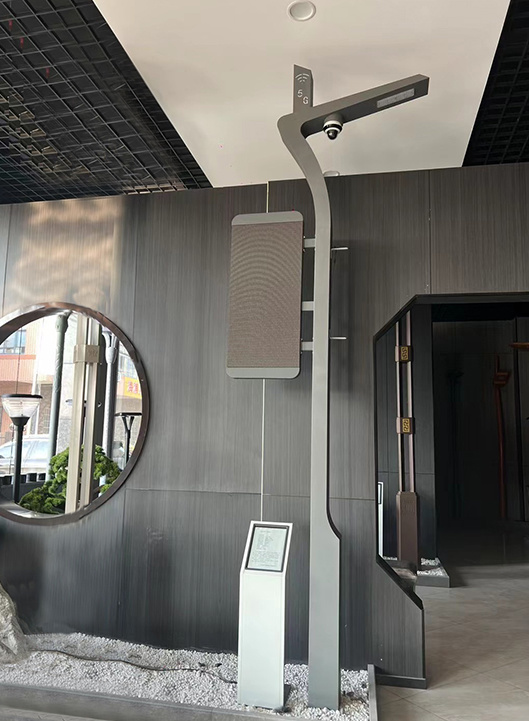
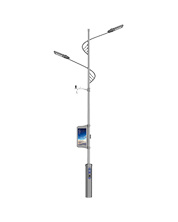
It is no longer just a lamp, but rather an integrated system that combines lighting control, environmental monitoring,
Integrating information dissemination, security surveillance, communication base stations, and even charging services into a single platform.
A multifunctional urban node. This shift in identity transforms streetlights from mere urban lighting fixtures…
The “end‑effector” has been elevated to a “data outpost” for urban governance.

The Challenge of Connectivity: Protocol Fragmentation and System Lock-in
The deployment of smart streetlights has not been without challenges. The primary bottleneck currently faced is,
It is the fragmentation of communication protocols and application-layer standards. Multiple versions coexist in the market.
National standards, industry standards, and local standards—when multiple standards coexist, the result is often…
It is “no standard available”—vendors each develop proprietary protocols, resulting in incompatibility among different systems.
Interoperability among the brand’s individual light controllers and management systems is challenging. Furthermore, more than 80% of…
The single-lamp controller is installed via wiring inside the luminaire or on the light pole, facilitating installation and maintenance.
Inconvenience further raises the barrier to large-scale deployment. This closed‑system environment,
This keeps the operation and maintenance costs of smart streetlights persistently high, making it difficult to truly achieve “integrated network management.”

From Analog to Digital: The Evolution of Power Supply Technology
The depth of digitalization in smart streetlights is also reflected in the technological roadmap of their power‑supply systems.
The 0/1–10V analog dimming power supplies widely used in traditional smart lighting systems,
There are three structural deficiencies: the dimming curves are not standardized, requiring coordination between power supply manufacturers and control systems.
System vendors conduct individual negotiations and debugging; this is a unidirectional protocol, so it cannot proactively report power status.
Operational status results in a “monitoring black hole”; asset and operations‑and‑maintenance data cannot be directly accessed.
Manual data entry is required. The introduction of digital power supplies, such as D4i‑compliant units, is transforming…
This scenario—supporting power‑supply operation data reporting, automatic luminaire asset identification,
Functions such as DALI bus power supply and auxiliary power supply transform the power source from a passively controlled component.
An intelligent node that is reportable, diagnosable, and traceable, equipped with a pluggable Zhaga interface.
The controller and luminaires deliver true “plug-and-play” functionality, significantly reducing deployment and maintenance costs.

Urban Nervous System: A Leap from Perception to Governance
Once smart streetlights are deployed on a large scale, they will form a city-wide sensing network.
Equipped with multi-mode sensors, including a light sensor, infrared detector, PM2.5 monitor, and image capture device.
The lampposts can transmit real-time data on traffic volume, air quality, noise levels, and more.
With the assistance of edge AI chips, some computations can be performed at the lamppost end—for example:
At night, the brightness is automatically dimmed on unoccupied road segments, and congested intersections are prioritized for alerting the traffic center.
There is no need to upload all raw data to the cloud. This “edge intelligence” both reduces…
Bandwidth pressure has also improved response times. Going a step further, smart streetlights are now integrating with energy storage,
Photovoltaic power generation is integrated to form distributed microgrid nodes, enabling operation during extreme weather or when the main grid…
When the power is out, switch to islanded operation mode to ensure basic lighting and emergency power supply.

The Boundaries of Governance
As smart streetlights evolve from simply “providing illumination” to “sensing” and “governance,” they have also brought about…
A new set of issues: data ownership, privacy boundaries, and algorithmic transparency. When streetlights “see”…
Increasingly, who has the authority to access this data, how can misuse be prevented, and how can citizens be kept informed?
Both deployment and withdrawal have become critical questions that must be addressed before smart streetlights can achieve large-scale adoption.
Technology can address “how to light,” but questions like “why light” and “who is the light intended for” remain.
It is a profound issue that designers and policymakers must address together.

Guangdong Quanhui Lighting Co., Ltd. Founded in 2004, it is a comprehensive lighting enterprise integrating manufacturing, sales, and installation.
21 years of dedicated manufacturing: Municipal streetlights 、 Landscape lighting 、 Courtyard light 、 High-mast light fixture 、 Smart streetlight Outdoor landscape lighting project
Related News
Guangdong Quanhui Lighting Co., Ltd
Phone : 86-13726017260 Mr Li
WhatsApp:+86-18028366908
E-Mail: 18028366908.qh@gmail.com
Website : www.quanhuilight.com
Address of exhibition hall : cards 28, 29 and 30, building c, international street lamp city, guzhen town, Zhongshan city, Guangdong province
Factory address : No.17 and 18 Jiwei Avenue, Haizhou Xianlong Luo Sha Jiwei Industrial Zone, Guzhen Town, Zhongshan City, Guangdong Province
Leave us a message.