









Above the Capital: The Formal Logic and Technological Evolution of Capital Lamp Designs
Author:
Source:
Release time:2026-08-03

From capital ornamentation to functional nodes
A post-top light, as its name suggests, is a lighting fixture mounted at the top of a pole and is commonly found in…
On courtyard walls, gateposts, balcony railings, and landscape columns. In the landscape…
In the lighting system, it occupies a unique position: it is neither a towering streetlamp nor…
Such a vantage point, surveying the whole scene, is not like the low‑lying lawn lights that creep close to the ground; rather, it strikes just the right balance.
Located at near eye level, it establishes a nearly eye-to-eye relationship with the user.
Dialogic relationship. This position determines the column-head lamp’s dual identity—during the day, It is characterized by its shape.
It contributes to the aesthetic composition of the space; as night falls, it fulfills its lighting function through light effects.

Structural Logic: The Order of Three Sections
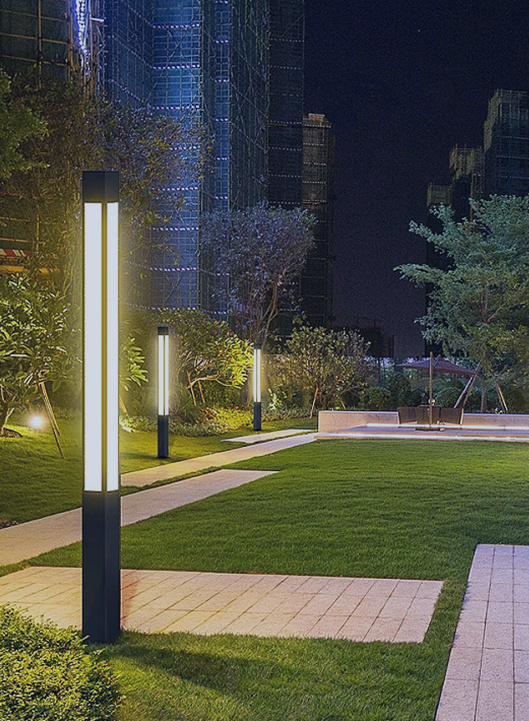
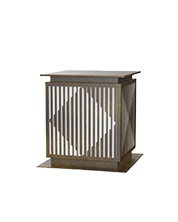
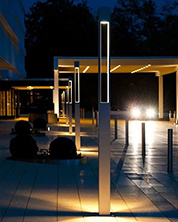
The structure of a traditional courtyard pillar lamp consists of three parts: the lamp head, the lamp post, and the lamp base.
The balanced proportions and harmonious color scheme of the three elements are the fundamental prerequisites for aesthetic form. The lamp base is close to…
On the ground, space must be allocated for junction boxes, so the cross-section is typically robust and substantial; the light pole is hollow and serves as a conduit.
Conductors can be made from various materials, including cast iron, stainless steel, and fiberglass-reinforced plastic, with cross-sections at both the top and bottom.
It can be customized; the lamp head, meanwhile, defines the fixture’s appearance and light color, with options such as a single-head design.
The distinction between the thesis, the antithesis, and the synthesis. This three-part structure may appear straightforward, yet it subtly implies…
The central design premise—mastering proportional relationships. The variation in height between the column capitals and the lamps,
It often hinges not on the intricacy of the details, but on whether these three sections…
Establish a holistic order that feels comfortable.

Technical Details: Concealment and Practicality
In recent years, the design of pillar lights has demonstrated a clear trajectory of evolution in terms of technical details.
A patented technology proposes positioning the mounting screws on the side of the lamp body’s base rather than at the top.
It is both concealed and aesthetically pleasing, while also protecting against rainwater erosion. The lamp’s top cover features a central-high, peripheral-low design.
The low-arched surface design facilitates drainage and prevents dust accumulation. In terms of the light source, multiple light-source modules have been incorporated.
Enables a single lamp to deliver various combinations of color temperature and brightness, allowing users to tailor the lighting to the scene.
Switch the lighting mode. The decorative pattern pieces on the translucent surface are also integrally molded with the frame.
Switching to independent pasting eliminates the need to modify the lamp body frame when replacing patterns.
Customization has become more flexible. The underlying rationale behind these refinements is: With greater precision
Its design is engineered to withstand the rigors of outdoor environments, employing more versatile components to meet a wide range of needs.

Spatial Adaptation: A Response to Style
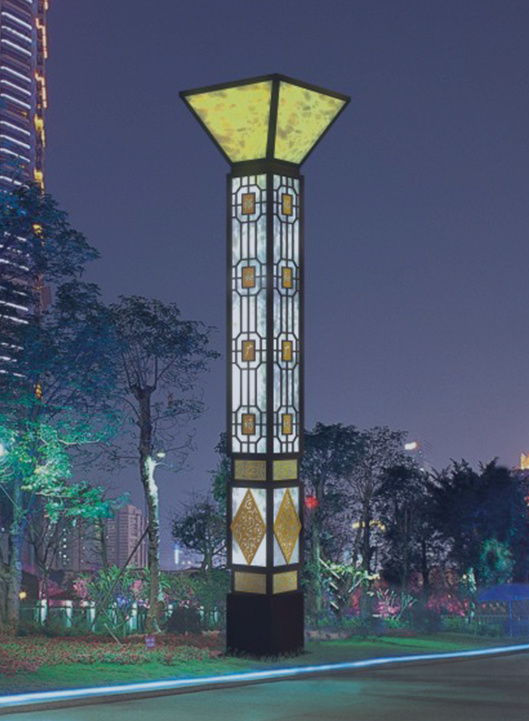
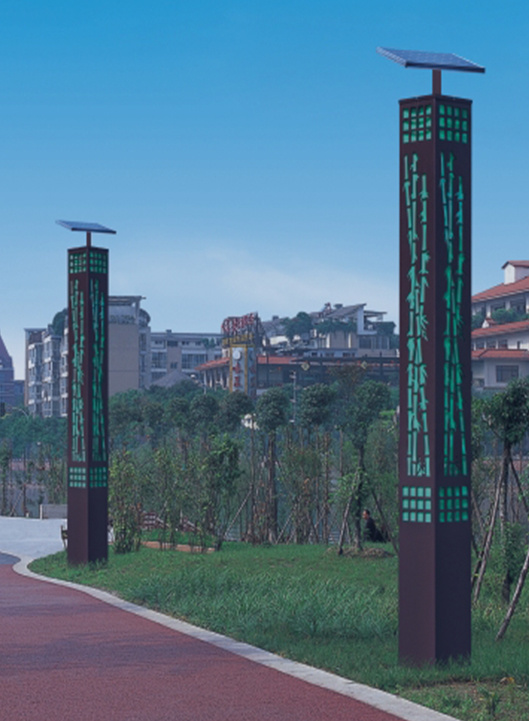
The application context of pillar lamps dictates their deep integration with the spatial style. In the New Chinese style…
In the courtyard, elements such as landscapes and cloud motifs are seamlessly integrated into the lamp design, creating a picturesque interplay of light and shadow when illuminated.
In European-style gardens, the decorative motifs of lamp bases and their proportional relationships to the columns adhere to the classical architectural order.
However, regardless of how its style evolves, the column lamp has always adhered to a fundamental design principle.
The principle—once attached to the column—should become an extension of the column’s language.
Rather than a crude add-on. Does a column-mounted lamp appear to be “grown” from the pillar itself,
It depends on whether its material, color, and proportions form an organic whole with the column itself.
of its continuation. When this continuity is achieved, the column capital lamp transitions from being a “fixture mounted atop the column”
The lighting fixture has been elevated to an inseparable part of the column.

Guangdong Quanhui Lighting Co., Ltd. Founded in 2004, it is a comprehensive lighting enterprise integrating manufacturing, sales, and installation.
21 years of dedicated manufacturing: Municipal streetlights 、 Landscape lighting 、 Courtyard light 、 High-mast light pole 、 Smart streetlight Outdoor landscape lighting project
Related News
Guangdong Quanhui Lighting Co., Ltd
Phone : 86-13726017260 Mr Li
WhatsApp:+86-18028366908
E-Mail: 18028366908.qh@gmail.com
Website : www.quanhuilight.com
Address of exhibition hall : cards 28, 29 and 30, building c, international street lamp city, guzhen town, Zhongshan city, Guangdong province
Factory address : No.17 and 18 Jiwei Avenue, Haizhou Xianlong Luo Sha Jiwei Industrial Zone, Guzhen Town, Zhongshan City, Guangdong Province
Leave us a message.