

















From Illumination to Perception: The Logical Evolution of Smart Streetlight Design
Author:
Source:
Release time:2026-08-24

A Leap in Functionality: From Single-Function Facilities to Urban Sensing Nodes
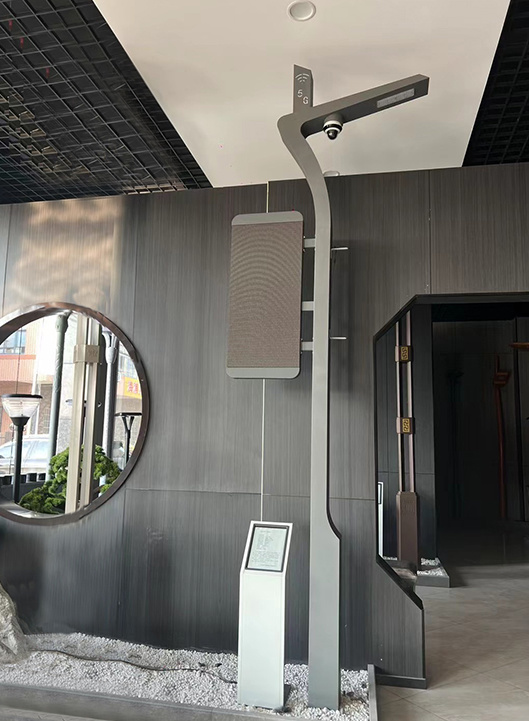
The advent of smart streetlights marks a fundamental reconfiguration of the functional role of urban lighting infrastructure.
It no longer has “illuminating the road” as its sole mission; instead, it achieves this by integrating communication, sensing,
The computing and interaction module has evolved from a standalone lighting fixture into the edge of the urban sensing network.
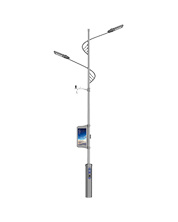
Node. In the pilot project in Guangzhou’s Pazhou West Area, smart integrated poles have been equipped with 5G micro base stations,
Modules such as security surveillance, environmental sensors, and information display screens—every pole is equipped with…
Real-time “perception” of traffic flow changes, air quality, and noise levels, and the transmission of this data. Return to
Urban management platform. This shift from “passive lighting” to “proactive sensing,” to make
Streetlights are no longer silent pieces of infrastructure, Become a collector and responder of urban dynamic information.

Architectural Consciousness: The Integrated Logic of Cloud–Pipe–Device
The depth of smart streetlight design is first reflected in the completeness of its system architecture. A set…
Mature smart streetlight systems typically follow a three-tier “cloud–pipeline–edge” architecture: the edge layer is deployed.
Each streetlight is equipped with a standalone controller that enables independent dimming, status feedback, and fault detection.
Self‑diagnosis; the control layer uses the distribution cabinet’s central controller as its hub, receiving commands from the cloud and…
It implements edge‑energy‑saving strategies and can operate autonomously even when disconnected from the network; meanwhile, the cloud side…
The digital management platform centrally aggregates all device data and provides remote monitoring,
Strategy configuration and operations management functions. This layered architecture ensures that the system can…
Stability and scalability in large-scale deployments—each luminaire can Independently managed,
It also avoids completely relying on cloud-based commands, thereby preserving offline autonomy. This architectural…
Redundant design reflects a profound understanding of the “uninterruptible” nature of public lighting.

Energy Efficiency and Perception: The Dual Logic of Control Strategies
The energy-saving logic of smart streetlights is grounded in the core principle of “lighting on demand.”
Through sensing devices such as illuminance sensors and vision sensors, the system can, based on…
Automatically adjusts brightness based on ambient light and traffic and pedestrian flow, achieving “full illumination when people are present,”
Dynamic dimming based on the “half‑bright when people are present” principle. At a more fundamental level, the design incorporates a visual sensor.
The resulting “perception matrix” can accurately detect vehicles within a 30-meter range and…
Movement trajectories ensure that the dimming strategy is based not only on ambient illuminance but also on spatial context.
Real-time assessment of usage status. This “scene‑responsive” lighting strategy,
Elevating energy conservation from static schedule-based management to dynamic spatial‑behavioral adaptation—street lighting
It delivers full brightness only when needed, while remaining in a low-power standby mode at all other times.

Safety and Humanity: Care Beyond Technology
Another design dimension of smart streetlights is their response to public safety. Guangzhou’s Pazhou…
The smart pole employs a 36V extra-low-voltage power supply system, effectively eliminating the risk of electrical hazards caused by rainwater at the source.
Electrical shock risks caused by immersion or equipment damage. Meanwhile, on the pole body… One-click alarm
Buttons, emergency charging modules, and information display screens will provide emergency services. Integrate into daily life Foundation
Within the facilities. These design considerations indicate that smart streetlights… Its true value lies not only in
How many features it integrates matters less than how it does so. Technology as a medium, responding to people in the city.
The Real Need in Space—From “Illuminating” From “The Road Home” to “Guarding the Way Home”
“of safety”, The further development of this proposition constitutes the humanistic foundation of smart streetlight design.

Guangdong Quanhui Lighting Co., Ltd. Founded in 2004, it is a comprehensive lighting enterprise integrating manufacturing, sales, and installation.
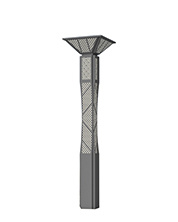
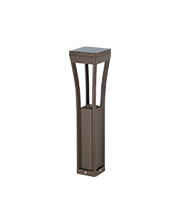
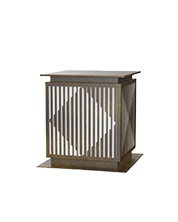
21 years of dedicated manufacturing: Municipal streetlights 、 Landscape lighting 、 Courtyard light 、 High-mast light fixture 、 Smart streetlight Outdoor landscape lighting project
Related News
Guangdong Quanhui Lighting Co., Ltd
Phone : 86-13726017260 Mr Li
WhatsApp:+86-18028366908
E-Mail: 18028366908.qh@gmail.com
Website : www.quanhuilight.com
Address of exhibition hall : cards 28, 29 and 30, building c, international street lamp city, guzhen town, Zhongshan city, Guangdong province
Factory address : No.17 and 18 Jiwei Avenue, Haizhou Xianlong Luo Sha Jiwei Industrial Zone, Guzhen Town, Zhongshan City, Guangdong Province
Leave us a message.