














Exploring Common Questions and Solutions for Smart Cities
Author:
Source:
Release time:2025-04-11

Definition of a Smart City
In today's world, Smart City This term is increasingly appearing in our field of vision. Simply put, a smart city is a city model that uses modern technology and data analysis to improve urban management and the quality of life for residents. So, how exactly does a smart city operate?
Components of a Smart City
The construction of a smart city is a systematic project involving many aspects. For example, traffic management, environmental monitoring, and public safety are all indispensable components. Through an intelligent transportation system, the city can effectively reduce traffic congestion and improve travel efficiency; while the environmental monitoring system can monitor air quality in real time, ensuring the health of residents.
Common Question 1: How is the security of a smart city ensured?
Many people, when mentioning technology, worry about data privacy and security issues. After all, Smart City a large amount of personal data is gathered. So, how can the security of this data be ensured? First, the government and relevant agencies need to establish strict data protection laws and regulations, and adopt advanced encryption technologies to prevent data leakage. In addition, the public should also enhance awareness of personal information protection and be cautious about sharing personal data.
Common Question 2: Does a smart city mean high costs?
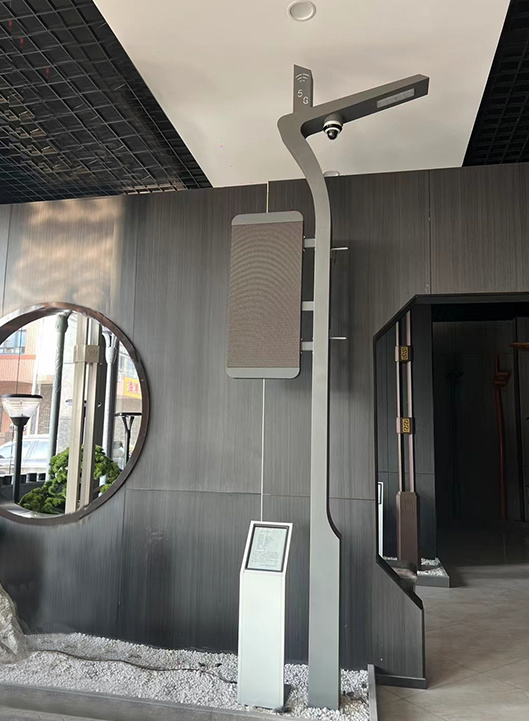
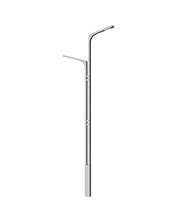
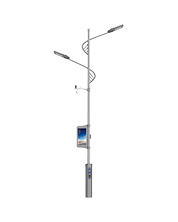
This is a rather controversial topic. Although the initial construction of a smart city may require a large investment, in the long run, it can significantly improve the city's operational efficiency, reduce resource waste, and thus reduce long-term maintenance costs. For example, smart streetlights are not only energy-saving, but can also automatically adjust their brightness according to the surrounding environment, thus extending their lifespan and reducing electricity costs.
Common Question 3: How to participate in smart city construction?
To participate in the construction of a smart city, citizens can start with small things around them. For example, actively participating in community environmental protection activities, or using smart applications to provide feedback on shortcomings in city management. At the same time, the government should also encourage public participation, through open data platforms, allowing residents to put forward opinions and suggestions on the future development of the city.
Future Outlook for Smart Cities
Looking to the future, Smart City the development potential is limitless. With the continuous advancement of technologies such as artificial intelligence and the Internet of Things, smart cities will further develop in a more intelligent and user-friendly direction. Imagine that in the near future, we can easily manage smart devices at home through our Mobile phones, and even when traveling, cars will automatically plan the optimal route, avoiding congestion; all this will become a reality.
Conclusion
In general, the construction of smart cities is a complex and challenging task, but its potential value and social benefits are undeniable. More and more cities are actively exploring and practicing the concept of smart cities. Let us look forward to the bright future brought about by these changes!
Zhongshan Quan Hui Outdoor Lighting Co., Ltd. Established in 2004, it is a comprehensive lighting enterprise integrating production, sales, and installation,
20 years focusing on production: Municipal street lights 、 Landscape lights 、 Courtyard lights 、 High pole lights 、 Smart streetlights and other outdoor landscape lighting projects.
Related News
Guangdong Quanhui Lighting Co., Ltd
Phone : 86-13726017260 Mr Li
WhatsApp:+86-18028366908
E-Mail: 18028366908.qh@gmail.com
Website : www.quanhuilight.com
Address of exhibition hall : cards 28, 29 and 30, building c, international street lamp city, guzhen town, Zhongshan city, Guangdong province
Factory address : No.17 and 18 Jiwei Avenue, Haizhou Xianlong Luo Sha Jiwei Industrial Zone, Guzhen Town, Zhongshan City, Guangdong Province
Leave us a message.