









Magnolia Lantern: Functional Reconfiguration and Formal Integrity within the Context of Cultural Relics
Author:
Source:
Release time:2026-10-20

Tracing the Origins of Form: From Commemorative Architecture to Urban Landmarks
The design prototype of the magnolia lamp did not emerge out of thin air. The head of cultural heritage conservation design for the Nanjing Yangtze River Bridge,
Research by Chun Qing, an associate professor at the School of Architecture of Southeast University, indicates that the bridge’s magnolia flower lanterns were designed by Beijing.
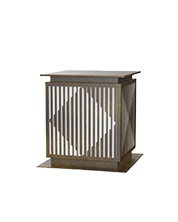
Custom-made by a civilian lighting manufacturer, its design is modeled after the entrance to the Great Hall of the People in Beijing from the late 1950s.
the magnolia‑flower lantern style, rather than the common rumor that it refers to the ornate street lamps of Chang’an Avenue. This is a scholarly verification.
It itself reveals a fact in the history of design: from the very beginning, the choice of form for the Magnolia lamp was…
It is closely related to the visual expression of “national image.” Each lamppost stands approximately 8 meters tall and weighs over…
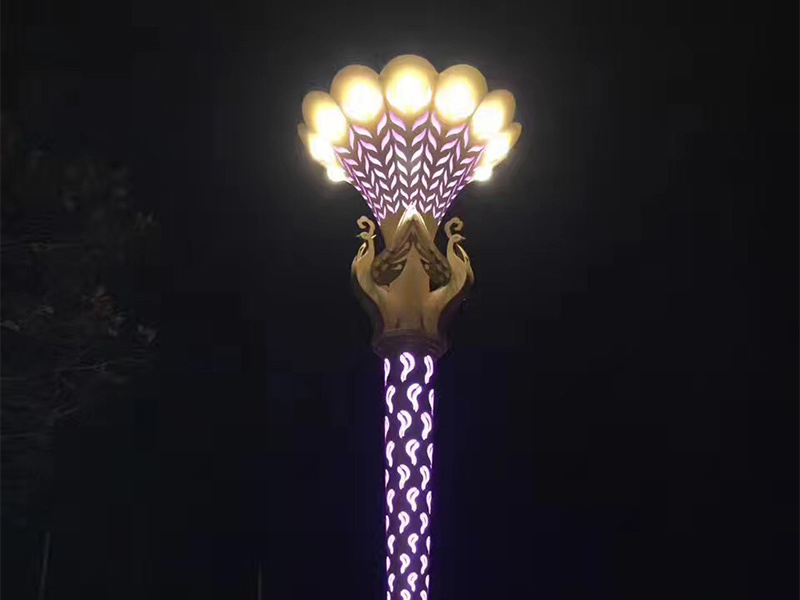
Weighing 700 kilograms, it consists of a pedestal, a concrete lamp post, a lamp bracket, and five magnolia‑shaped luminaires.
150 pairs of lampposts are neatly arranged along the bridge deck at intervals of approximately 40 meters, resembling a “line of troops awaiting inspection.”
The spatial order. Here, form is not merely an aesthetic choice but also the construction of a spatial ritual.

Functional Dilemma: The Misalignment Between Decorative Prioritization and Lighting
Yulan lamps have long faced a fundamental contradiction: their original design was primarily oriented toward landscape decoration,
Meanwhile, the functional requirements for road lighting continue to rise with urban development. Traditional magnolia lamps
It employs a diffuse, divergent illumination method, “with most of the light scattered into the night sky.”
The road surface illuminance is only about 3 lux, equivalent to moonlight levels. This predicament is not unique to magnolia‑style streetlights.
It is not unique; rather, decorative lighting fixtures in today’s urban environments, where functional lighting standards are becoming increasingly stringent.
A common source of embarrassment. The crux of the matter is not that the magnolia lamp “isn’t attractive,” but rather that…
There is a structural mismatch between its optical logic and the functional logic of road lighting.

Technological Self-Awareness: Reconfiguring Optics Without Altering the External Form
The renovation of the Nanjing Yangtze River Bridge offers a technical approach worthy of close examination. Faced with…
Faced with the dual requirements of “preserving the original appearance of the cultural relics” and “meeting road illumination standards,” the design team successively…
It has been ruled out to install LED beads on the crash barrier (which would compromise its impact‑resistance) or to cut openings in the lampshade.
(Violation of cultural heritage protection requirements) Two设计方案 were proposed, ultimately embedding the LED beads within the circular lamp bracket.
Square — Each “magnolia flower” consists of eight 3-watt LED beads in the outer ring and six 2-watt LED beads embedded inside.
The lighting system features downward‑facing light sources that illuminate the road surface, while the lampshade itself assumes a secondary role as ambient lighting.
The core design philosophy of this solution is to “lower” the primary light source from within the lampshade.
At the level of the flower receptacle, functional lighting is physically separated from landscape lighting.
Thus, optical reconstruction is achieved without altering the artifact’s exterior appearance. Measured pavement surface
Illuminance has been increased to 25–30 lux, while overall energy consumption has decreased by approximately 80%.

The Contemporary Vitality of Form
The continuation of magnolia lamps in contemporary urban renewal is likewise worthy of examination. On Quzhou’s main thoroughfare…
The magnolia lamp has been redesigned to retain its classic silhouette while upgrading the light source to high-efficiency LEDs, with optical optimization.
The subsequent lighting is soft and glare-free, harmonizing with the roadside greenery and the architectural character.
Transforming the magnolia lamp from a mere lighting fixture into a cultural symbol that weaves together the city’s urban landscape.
From the restoration of cultural relics in Nanjing to the urban renewal in Quzhou, the enduring vitality of the magnolia lamp lies precisely in:
It responds to the changing demands of the times with an enduring, classic form. A good…
The magnolia lamp is both a tribute to history and a response to the present.

Guangdong Quanhui Lighting Co., Ltd. Founded in 2004, it is a comprehensive lighting enterprise integrating manufacturing, sales, and installation.
21 years of dedicated manufacturing: Municipal streetlights 、 Landscape lighting 、 Courtyard light 、 High-mast light fixture 、 Smart streetlight Outdoor landscape lighting project
Previous Page
Related News
Guangdong Quanhui Lighting Co., Ltd
Phone : 86-13726017260 Mr Li
WhatsApp:+86-18028366908
E-Mail: 18028366908.qh@gmail.com
Website : www.quanhuilight.com
Address of exhibition hall : cards 28, 29 and 30, building c, international street lamp city, guzhen town, Zhongshan city, Guangdong province
Factory address : No.17 and 18 Jiwei Avenue, Haizhou Xianlong Luo Sha Jiwei Industrial Zone, Guzhen Town, Zhongshan City, Guangdong Province
Leave us a message.