









Chinese‑Style Landscape Lighting: A Design Consciousness of Symbol Extraction and Cultural Translation
Author:
Source:
Release time:2026-09-28

From “Chinese Elements” to “Design Grammar”
The design dilemma of Chinese-style landscape lamps lies in the fact that most works reduce “Chineseness” to
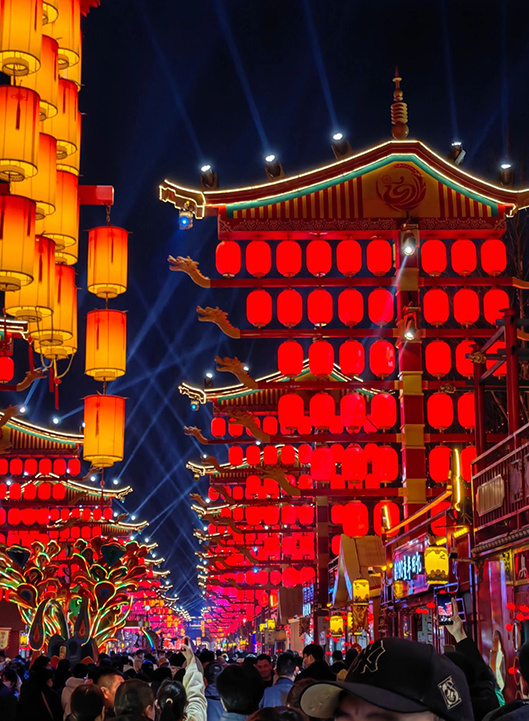
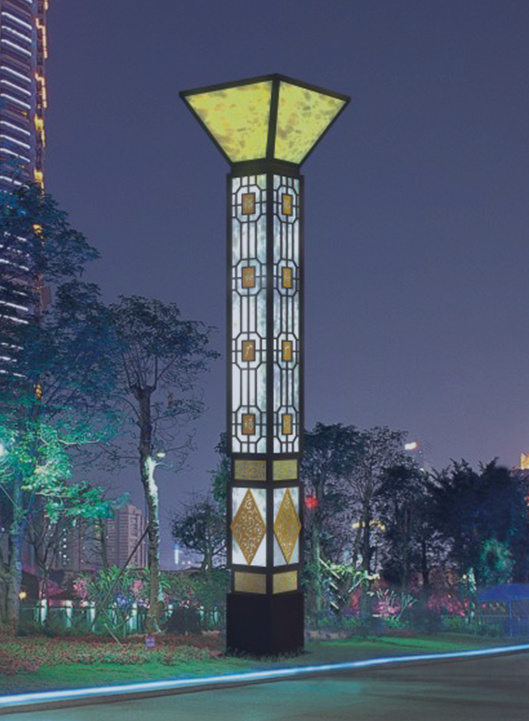
A proliferation of motifs and faithful reproductions of forms. The key pattern, cloud motif, lotus, and palace lantern are transplanted wholesale.
At the surface of the lamp body, the designer believes they have achieved “cultural heritage,” but in reality, they have fallen into…
A kind of inertia in symbolic consumption—research indicates that contemporary landscape lighting products generally…
Lacking local character and the continuity of indigenous cultural heritage, most designs remain confined to superficial aesthetics.
The superficial stage of “grasping the profundity of traditional Chinese culture at the design level” has failed to reach the core.
The profound connection between cultural essence and design logic. The true essence of Chinese‑style landscape lighting…
The question is not “how many Chinese elements to attach,” but rather how to draw from Chinese culture.
Extract a set of design syntax that can be translated into the language of lighting.

The Translation of Artistic Conception: Taking “One Flower, Five Leaves” as an Example
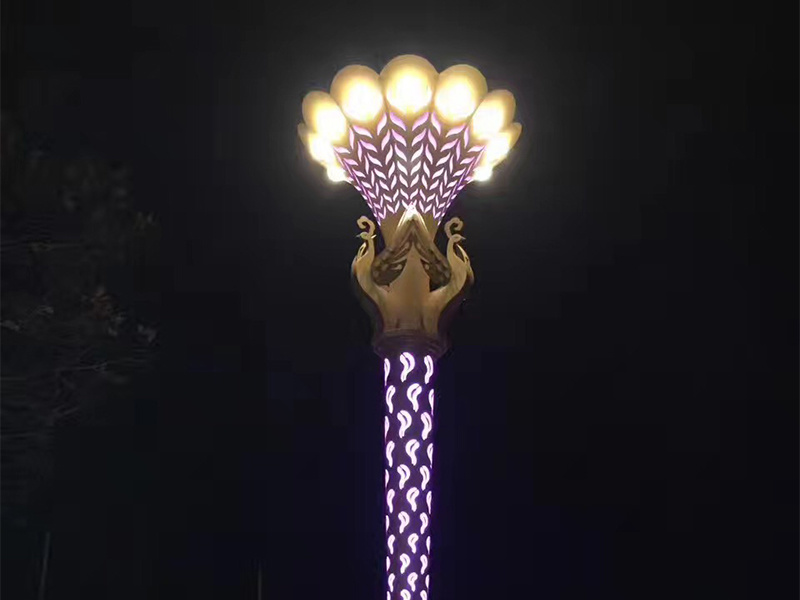
The design concept behind the “One Flower, Five Leaves” landscape streetlamp offers a case study worthy of close examination.
Its inspiration stems from the verse uttered by Bodhidharma, the founder of Zen Buddhism, when he transmitted the Dharma to his second disciple, Huike: “When one flower blooms…”
“Five leaves—naturally, the result takes shape.” The designer did not apply Buddhist motifs directly to the lamp body,
Instead, the design adopts the structural motif of “five lotus leaves supporting a single flower,” with an added base to the lamp post.
Buddhist-inspired motifs serve as subtle design accents. The overall aesthetic of the lamp is defined by its ability to “fully reveal”…
“The profound artistic conception of Buddhist Zen,” rather than “the presentation of Buddhist motifs.” This approach…
The core lies in this: culture is first internalized as a formal relationship and a spatial ethos,
Only then does it take on a tangible form. As a result, the luminaire is no longer merely “a lamp with Chinese elements,”
Rather, it is “a lamp that has grown out of the logic of Chinese culture.”

Scale and Temperature: Spatial Adaptation of Chinese‑Style Landscape Lighting
The design sophistication of Chinese-style landscape lamps is also reflected in their keen grasp of scale. Traditional gardens…
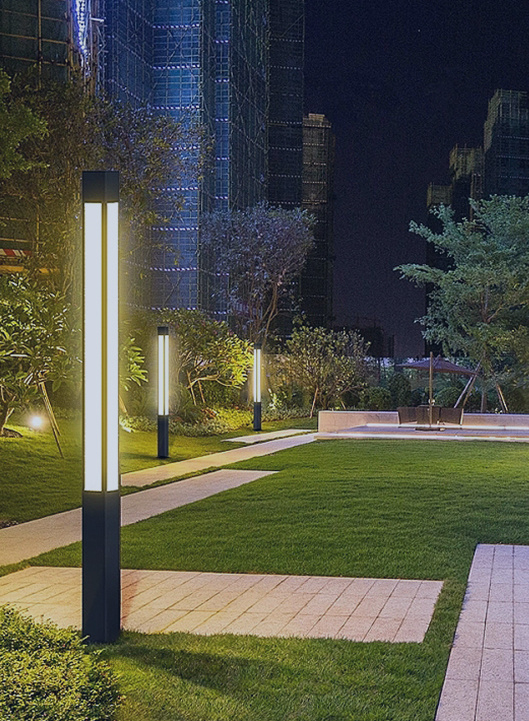
Environment Traditional-style luminaires must be installed to preserve the overall aesthetic and ambiance of the environment.
When selecting lighting colors, Chinese-style courtyards and scenic areas should use warm yellow tones, with a color temperature of approximately…
Between 2700K and 3000K; excessively high color temperatures can diminish the warm, gentle texture that is characteristic of Chinese landscapes.
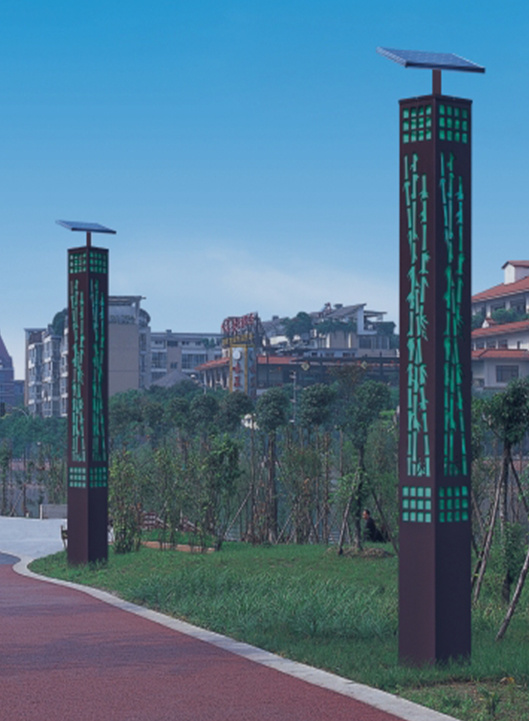
Lamp bodies are typically made of cast aluminum or steel, with surfaces finished in an antique‑style or fluorocarbon coating to resist… Outdoor
While the environment erodes, it maintains a composed form and intact details. These seemingly… Technical
The choice, in fact, determines whether Chinese‑style landscape lighting can continue to uphold its… Daytime of culture
Temperament—when the interplay of light, color, and material deviates even slightly, “artistic conception” can easily be reduced to mere “stagecraft.”

Contemporary Presence: Cultural Consciousness, Not Retro Style
The contemporary value of Chinese‑style landscape lighting does not lie in replicating the forms and designs of lamps from a particular dynasty or era,
Rather, it lies in re‑answering the question of “how Chinese identity can be present” through the lens of contemporary design language.
This calls for designers to possess a sense of cultural awareness: an understanding of the “negative space” inherent in Chinese aesthetics.
How can concepts such as “qi yun” and “artistic conception” be translated into light‑ratio control in lighting?
The rhythm of light and shadow, and the layering of space—rather than equating “Chinese style” with “imitation of antiquity.” When a lamp…
Chinese-style landscape lamps can, at night, perpetuate the spiritual essence of Chinese spatial aesthetics through light.
It thus completed the leap from a stylistic label to a design stance.

Guangdong Quanhui Lighting Co., Ltd. Founded in 2004, it is a comprehensive lighting enterprise integrating manufacturing, sales, and installation.
21 years of dedicated manufacturing: Municipal streetlights 、 Landscape lighting 、 Courtyard light 、 High-mast light pole 、 Smart streetlight Outdoor landscape lighting project
Previous Page
Previous Page
Related News
Guangdong Quanhui Lighting Co., Ltd
Phone : 86-13726017260 Mr Li
WhatsApp:+86-18028366908
E-Mail: 18028366908.qh@gmail.com
Website : www.quanhuilight.com
Address of exhibition hall : cards 28, 29 and 30, building c, international street lamp city, guzhen town, Zhongshan city, Guangdong province
Factory address : No.17 and 18 Jiwei Avenue, Haizhou Xianlong Luo Sha Jiwei Industrial Zone, Guzhen Town, Zhongshan City, Guangdong Province
Leave us a message.