









Light Hides in the Setting, Meaning Emerges in the Subtle: The Philosophy of Proportion in Landscape Lighting Design
Author:
Source:
Release time:2026-11-18

The highest art of landscape lighting is to make people forget the light fixture while remembering the warmth of its glow.
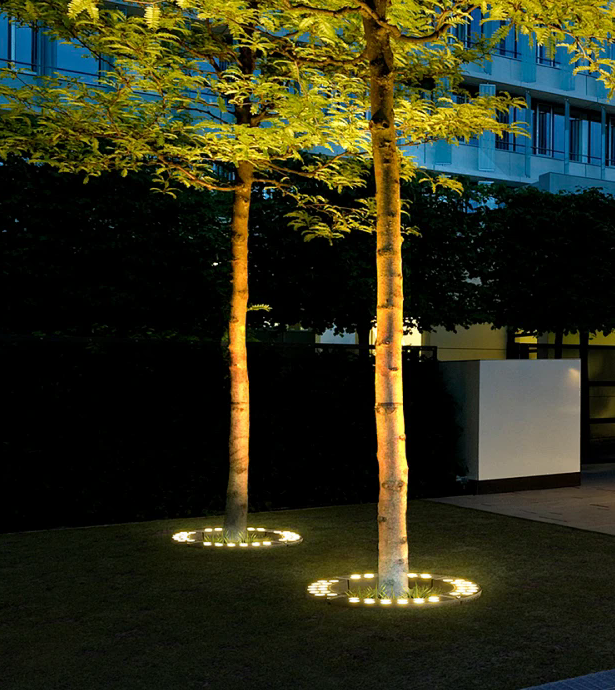
The “see the light, not the lamp” concept promoted for West Lake’s nighttime scenery is not about technical concealment, but rather
A Consciousness of Design Ethics—Luminaires Step Back into the Environment, While Luminous Efficacy Takes Center Stage
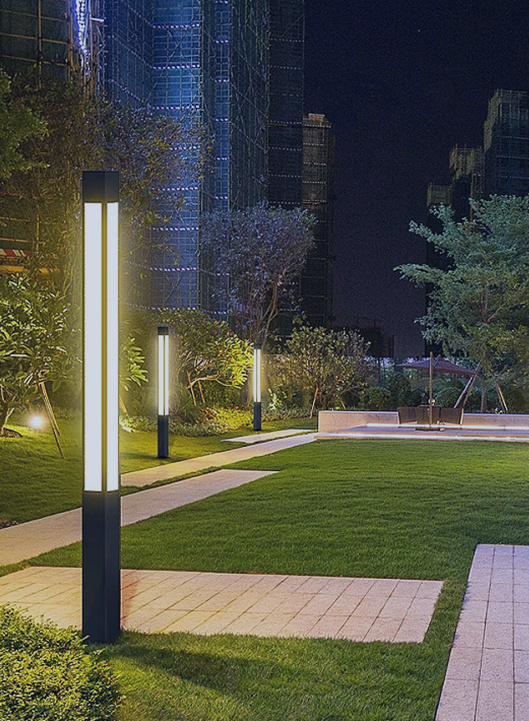
Define the space. This concession places almost exacting demands on the design: the form must harmonize with the site.
The textures must blend seamlessly, the color temperature should harmonize with the venue’s character, and glare control must be precise to within a millimeter.
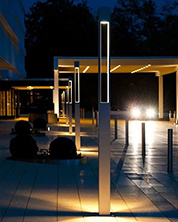
Specifically, the installation position of lighting fixtures should take into account human line of sight and walking pathways to avoid
The light source enters the normal field of view; the design of the shading angle must ensure that light is projected onto the target area.
rather than spilling into the surrounding area; the material and color of the luminaire must respond to its environment.
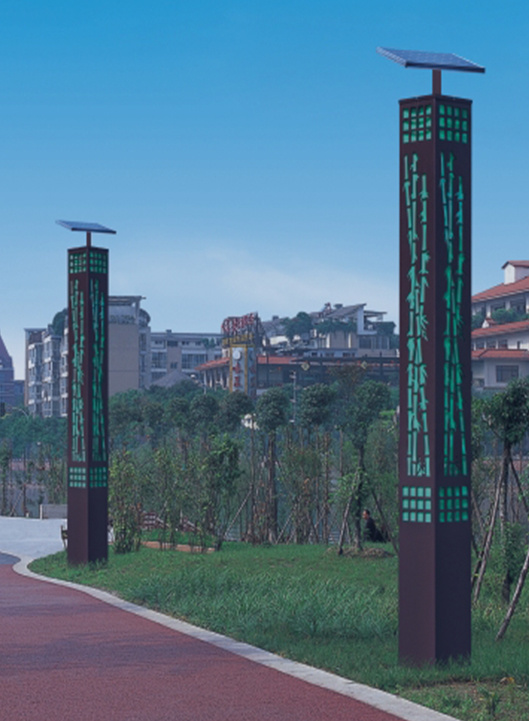
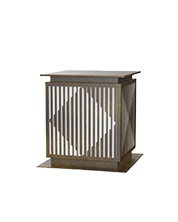
Texture — Lamps next to stone walls should avoid competing for attention with high-gloss metal; wood is preferable.
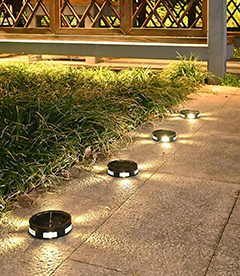
The lampposts along the plank road should continue the natural texture with a warm, gentle feel. When a lamp is visually
Only when it nearly vanishes does it truly achieve “presence.” Conversely, with an ostentatious form
Landscape lights that prove their worth by competing in brightness merely reduce space to
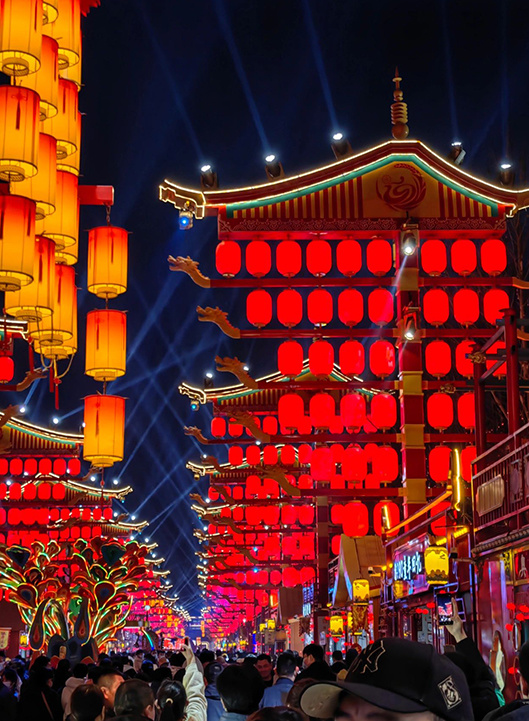
At a light-source–centric exhibition, visitors remember the dazzling brilliance of the lamps and forget the essence of the space itself.

Losing oneself in the spirit: The art of cultural translation
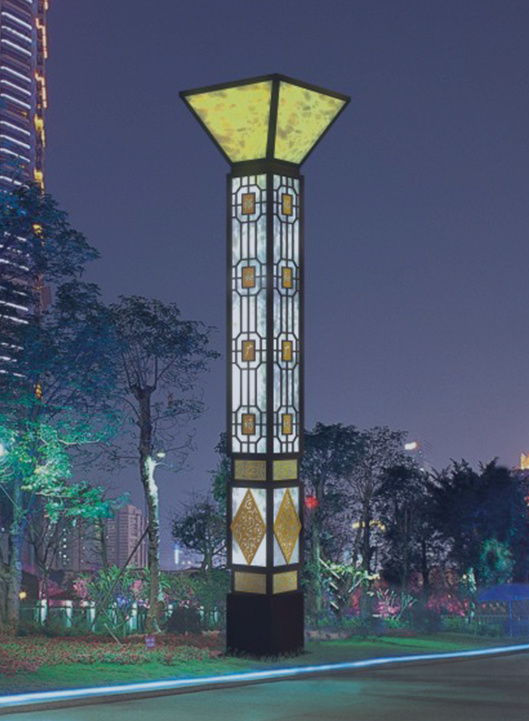
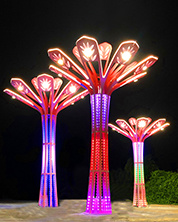
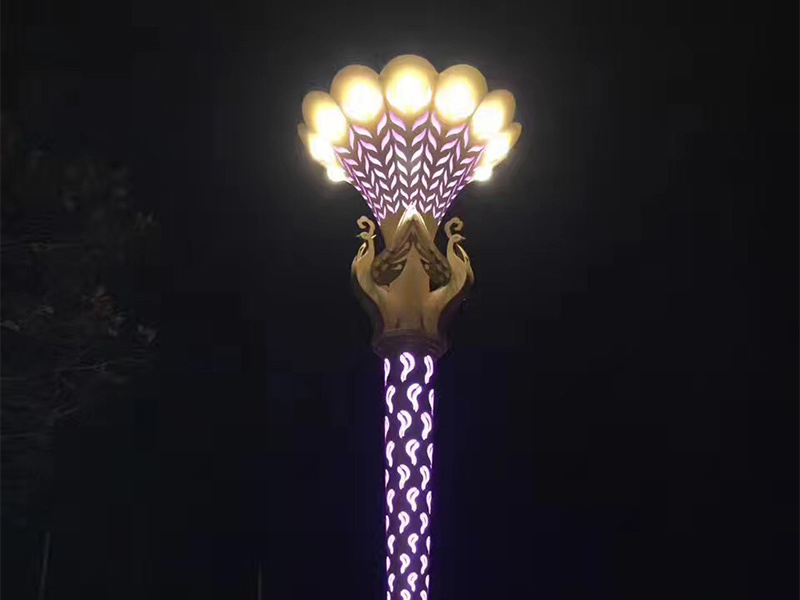
The cultural expression of landscape lighting lies in subtlety and integration, rather than superficial decoration. Most “X lantern” products on the market
It stops at the crude transplantation of “being a flower standing on a lamppost,” resembling the form but losing the spirit, thus reducing culture…
The symbols have been simplified into decorative stickers that can be copied in batches. True translational wisdom lies in capturing the essence…
Controlling Form — By balancing abstraction with figuration, the work conveys the spirit and vitality of its subject rather than merely replicating its outline.
The attempt to extract a design language from the culture of the solar terms follows precisely this path of “capturing the spirit while letting go of the form”:
Rather than adorning the lamp body with concrete, representational patterns of natural phenomena, it employs the alternation of warm and cool hues and the modulation of brightness.
The rhythm echoes the passage of the seasons. Culture is not merely a pattern affixed to the lamp’s surface; rather, it permeates.
A sense of proportion in formal logic and the perception of light and color—this is reflected in the designer’s handling of “resemblance and un-resemblance.”
The delicate balance of that one-inch distance is reflected in the restrained use of symbols and the full respect for artistic spirit.

Content-Driven Dynamics: Technology Without Crossing Boundaries
LEDs and smart controls have endowed landscape lighting with unprecedented expressiveness, but they have also led to an overabundance of dynamic effects and
The hidden concern of color disorder. The “Morning Melody” landscape lights at Dongying Yellow River Square follow a seasonal logic—spring green,
Summer blue, autumn yellow, winter white—allowing the play of light to find its temporal order and natural grounding.
This kind of “dynamic with substance” is far superior to endless, mindless chasing. Technological upgrades should not
Aesthetic degradation in guidance: every change in lighting effects should have a narrative rationale, rather than being arbitrary.
The flickering. The underlying logic of dynamic design lies in this: the rhythm of light should respond to the character of the place.
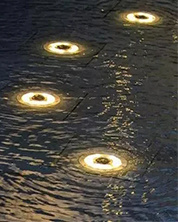
Rhythm — the lighting in waterfront spaces can gently rise and fall in time with the rhythm of the water, while the light effects in commercial districts…
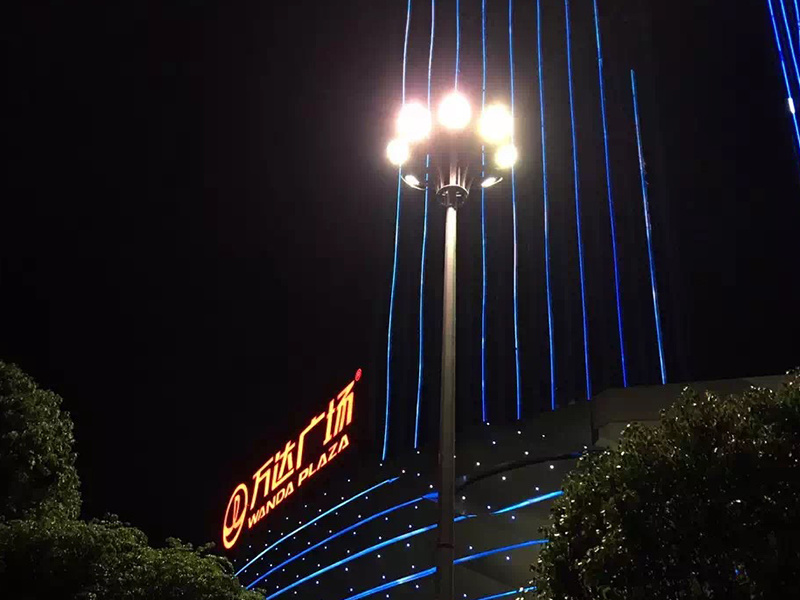
Lighting can be dimmed or brightened in response to pedestrian density, while the color of light in commemorative spaces should remain steady and dignified.
When motion is grounded in purpose, technology ceases to be a tool for ostentation and becomes a language of storytelling.

The Measure of Light
At its core, advancing landscape lighting design comes down to mastering the right balance: illuminating without intruding.
Expressing without being loud, innovating without losing measure. This sense of proportion cannot be standardized into a set of parameters,
It stems from the designer’s repeated readings of the site, their ongoing attentiveness to users’ perceptions, and
A contemporary application of the age-old principle “less is more.” A well-designed landscape light,
What we illuminate is not just the night, but also our understanding of and commitment to spatial quality.

Guangdong Quanhui Lighting Co., Ltd. Founded in 2004, it is a comprehensive lighting company integrating manufacturing, sales, and installation.
21 years of dedicated manufacturing: Municipal street lighting 、 Landscape lighting 、 Courtyard lamp 、 High-mast light 、 Smart streetlight Outdoor landscape lighting project
Previous Page
Previous Page
Related News
Guangdong Quanhui Lighting Co., Ltd
Phone : 86-13726017260 Mr Li
WhatsApp:+86-18028366908
E-Mail: 18028366908.qh@gmail.com
Website : www.quanhuilight.com
Address of exhibition hall : cards 28, 29 and 30, building c, international street lamp city, guzhen town, Zhongshan city, Guangdong province
Factory address : No.17 and 18 Jiwei Avenue, Haizhou Xianlong Luo Sha Jiwei Industrial Zone, Guzhen Town, Zhongshan City, Guangdong Province
Leave us a message.